Interview with John Gerdes, Head of Research at KLR Group

By Uncategorized

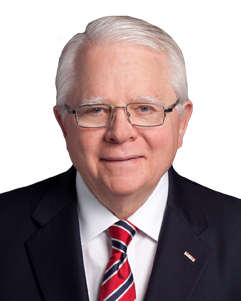
Oil & Gas 360® had an opportunity to speak with John Gerdes about the oil and gas industry from his perch in Houston as KLR Group’s Managing Director and Head of Research. KLR is a merchant and investment bank, research house, institutional sales and trading firm that is focused on the natural resources and energy space. In this oil and gas interview, Gerdes brings to the table 30 years of oil and gas experience from his posts at Canaccord Genuity, SunTrust Robinson Humphrey, Raymond James, Salomon Brothers, Jefferies & Company, Shell and ARCO. Gerdes holds an MBA from the University of Chicago and a BS in Petroleum Engineering from the University of Tulsa.

OAG 360: John, you’ve been in this business a long time and have seen fads, trends and cycles. Does the rapid downturn in crude oil prices feel any different than it did in 2008, 1998 or 1986?

JOHN GERDES:  Well, in my 20s I was an engineer, in my 30s I was a banker and now as a researcher, it sort of all builds on itself. If we go back to ’86, that’s when I was coming out of engineering school. In the ’86 pullback, Saudi was tired of supplying everybody on the globe except themselves so they cratered oil prices. 1998 was more of a supply side reaction. 2008 had more to do with the demand side of the equation. We were seeing a softness in demand. Today, we’ve got all the dynamics at play and 500,000 to 1,000,000 barrels is the bandwidth of uncertainty in any given year.

OAG 360: What is different today about the industry than when you started your analytical career at Raymond James?

JOHN GERDES:  The seeds were sewn in the fall of ’09 forward, and so we’ve seen a projection of growth for a few years now. The idea to create stability around a price that was equitable to all parties came from Saudi. We felt ’15 was the year. There’s a complete lack of cohesion in the Gulf States; we’ve seen a little more growth and the Saudis are acting a little more punitively than we imagined. OPEC has been driven by Saudi and the Gulf States. The other members are mostly window dressing. Saudi has sent signals they’ll put pressure on U.S. activity. The situation today is a hybrid—3 parts supply and 1 part demand—it’s a blend. You’ve got China in the equation too. China’s been running a surplus for many years; they’re comfortable running a deficit for 2 or 3 years now; their budget was $90-$95 a barrel oil. Tight oil growth is good through ’15 or ’16; after that there will be significant modification of growth in tight oil. The Saudis didn’t see tight oil as a long term threat.

Sophistication has evolved. We’d be using competitive advantage as a model if nobody put out any guidance. What we’ve got today is this:

  • Greater granularity.
  • The hedge fund industry grew up in this time.
  • I think the evolution is toward more intensity: well-by-well NAV.
  • Only a few companies develop per-well cost recovery concepts. Ultimately you can’t know cost and recovery, you have to look at what a company actually spends.
  • We think the market is going to evolve away from that level of granularity.
  • We look for a nudge toward a holistic market approach.
  • We believe the market will internalize what you can test and observe—it’s an evolution to find the right framework to understand E&P models; we’re trying to do things based on how the market will internalize the situation.
  • Here is one person’s perspective: we’ve all seen evidence that Initial Production rates are a poor representation of what a well can do. A 30-day rate has some explanatory power.
  • How does the market internalize the risk of an acreage footprint? You have to look at depth of inventory and cost of capital.
  • There’s one model that sees past next year: Pioneer – the market has given a value to a multi-decade depth of inventory.
  • Dry gas in this market is death.

OAG 360:  At what prices do you believe that crude oil and natural gas are at an appropriate premium to the marginal cost of production?

JOHN GERDES:  You can look at the cost of supply by looking at tranches of capital. We focus on actual business execution. We see the Eagle Ford, for example, as breakeven at $60 oil—that’s a cash breakeven, not a 10% breakeven. The Permian at $70—again that’s a capump1 Oil & Gas Interviewsh breakeven with no return in it—and the Midcontinent at $80. Through the lens of equity, the actual capital deployed in these plays—I can’t know a well cost and I can’t know a type curve: I don’t care if the cost is $8-$12 million to drill and complete a well; it’s a massive distortion between the marketing decks coming from every company. At $92.50 oil almost the whole industry is cash flow negative.

The cash breakeven is $73 oil, with no return. If we end up at $85 NYMEX, we’ll see a 10% activity reduction level. If it’s $80 NYMEX, we’ll see a 20% activity reduction level starting next year.  $80 to $90 NYMEX, you’ll see adjustments over the next six quarters. I see conclusions suggesting the industry is free cash flow neutral at $90 oil and $4.00 gas, but if we stay sub-$90 we’ll see adjustments.

When you look at OPEC, what happens in their late November meeting? There is probably a likelihood of a middle ground [price] cut and that will slow down U.S. activity levels 10%. 2015 is already dialed in at a million barrels plus. We could see a move in the rig count from 1,600 oil rigs to 1,450 hit in early 2016, with an $85 per barrel NYMEX. At an $80 NYMEX, could be a 1,200 rig count, which would mean stalling growth. At a half-million barrels or less in U.S., oil growth becomes more muted and we’ll see firmness in prices. Saudi does not see $80-$90 Brent as equitable; they see the window as $100-$110 per barrel.

OAG 360:  When U.S. LNG exports ramp up, how will that supply affect global markets and geopolitics?

JOHN GERDES:  Well, for one, LNG in British Columbia is challenged; the cost of build-out is challenging. We don’t see anything in BC LNG in this decade; they need pipelines and infrastructure.

In the U.S., the regulatory climate is pretty well under control. You’ve got Sabine coming in 2015-16. Freeport, Cameron and Cove Point are the other export plants in the works; but you won’t see LNG exports from them until late 2019 due to the build. If you assume a $4 NYMEX environment and look at Cheniere’s pricing model, between the 15% premium and liquefaction charges of $3.00, charges to get the LNG through the Panama Canal, you’re looking at $12 or low teens to land the gas in Tokyo Bay. That relegates the Gulf Coast gas to a local spot market, and you’ve got to ask ‘what are the utilization levels?’  From 2019 forward you could see a market-altering pull forward, but Europe and Latin America are not the target markets; it’s Asia—China, Japan, South Korea and Taiwan. India is a next decade event. There has to be a massive cost absorption. There’s a tally of 4-8 Bcf with those four plants. And now China has thrown down a price with their Russian deal.

weld o&g ops 016OAG 360:  Looking out 30-years is natural gas a bridge to another low carbon fuel source, or is its place cemented as the world’s low carbon fuel, both for electricity generation and transportation?

JOHN GERDES:    You can look at liquid fuel efficiencies. Wind is doing some interesting things. It’s a big part of low carbon growth globally, but I think we are a prototype: deemphasizing coal will be to the benefit of natural gas. When you look at natural gas for transportation, at the retail level it makes no sense. You’d need to drive the payouts inside of three years, really inside of two years to get rapid adoption. CNG costs creep up, but tractor trailer rigs is where it has the best chance – it’s a move away from diesel.

OAG 360:  What happens if New York greenlights fracing—will it become another Pennsylvania, and how will the New York production affect the markets?

JOHN GERDES:  I think New York is a complete non-issue. It won’t happen.

OAG 360:  What impact do operators have on WTI or natural gas realized prices?

JOHN GERDES:   This year about half of the gas growth is associated gas. Next year we’re going to be looking at 3 Bcf of associated gas growth, 2016 forward. If we drop a few hundred oil rigs out of the system, then we’re probably going to be looking at $4 – $5 per mcf gas prices.

OAG 360:  If you were starting your own E&P company, which basin would you want to focus on and why?

JOHN GERDES:   We are in the later innings as far as unconventional resource development. That went from 2009 forward. Maybe East Texas gas with a big liquids hopper. I think I’d be likely to take ownership of a company with a competitive quality asset and drive a unique culture, testing the way we model—think about the profit. I believe in a culture of openness, developing a tangible mission that we hold on to every day. We do that here. We change ratings more than five times more often than everybody else on the Street. We employ rigor. I’d take a Bonanza Creek, for example, and run it; get the culture really right and run it with a ruthless operational execution, with an incredible amount of measuring and benchmarking using real cash and economic markers.

In the Midcontinent, TMS and Utica, on the margin they’re going to be challenged to be competitive—Saudi is putting pressure on that right now.

Full Article: http://www.oilandgas360.com/oil-gas-360-exclusive-interview-stephens-ep-research/
 

Five Interview Questions Employers Should Ask

By Uncategorized

Original Article at The Wall Street Journal

As the economy picks up, companies are starting to hire more. But managers often only get funds for a few key hires, so they have to select new employees wisely. That makes conducting a smart interview critical.

1. In what ways will this role help you stretch your professional capabilities?

2. What have been your greatest areas of improvement in your career?

3. What’s the toughest feedback you’ve ever received and how did you learn from it?

4. What are people likely to misunderstand about you?


5. If you were giving your new staff a “user’s manual” to you, to accelerate their “getting to know you” process, what would you include in it?

Read Full Article at The Wall Street Journal


Do Your Homework Before the Interview

By Uncategorized

Full original article at The New York Times

Research the company and the industry, says Adrien Fraise, founder of Modern Guild, which provides online career coaching to college students and high school seniors. “Know the major industry trends and news,” he says, and be able to talk about how they could affect the company.

Find out who runs the company and how they got there. “Look at their profiles on LinkedIn and see if you find a common bond,” says David Lewis, the chief executive of OperationsInc., a human resources outsourcing and consulting firm in Norwalk, Conn. “If you are able to say, ‘I went to the same college as you’ or ‘I also majored in psychology,’ that demonstrates you really did your homework.”

Q. What questions can you expect, and how can you prepare to answer them?

A. You may be asked to walk the interviewer through your résumé, so prepare concise, articulate anecdotes to illustrate what you did or learned in each experience you’ve listed, Mr. Fraise says. Highlight what you achieved and the skills you used — and how you want to keep using them. “Rehearse in front of the mirror and then in front of others,” he says. “Be so comfortable with it, it doesn’t sound scripted.”

Interviewers often ask questions like “Can you give me an example of when you had to work as part of a team or learned something new quickly?” Mr. Lewis says your examples might come from experiences in a club, fraternity or sorority. “Did you organize a membership push? Plan events? Do recruiting?” he says.

If you’re asked a question like “Why did you choose your college major?” be complete in your answer. “Don’t just say ‘because I really like psychology,’ “ Mr. Lewis advises. Instead, note from a business perspective why you liked the subject. “Maybe you found the classes to be informative about human behavior, which is a key to success in anyone’s business,” he says.

Take along samples of your work — whether from an internship, a class or an extracurricular activity — in a folder or on a laptop computer or tablet.

And always prepare questions to ask at the end of the interview, says Alexa Hamill, American campus recruiting leader for PricewaterhouseCoopers in Philadelphia. Questions on the interviewer’s own career progress are a way to conclude, she says: “What opportunities have been presented to them? How were they trained and developed? This shows you are looking at the job as something potentially long term.”


Read full original article at The New York Times


Business Week – Top 50

By News & Media

David Preng was named by Business Week magazine as one of “The 50 Most Influential Headhunters in the World.” This is the first year he made the list of the world’s most powerful talent brokers. At that time, the firm’s clientele numbered more than 700 companies. According to the Business Week report, executive recruiting worldwide is a $10 billion+ market and growing, as competition for top talent becomes tighter. The article also noted that individual reputation was the most important reason corporations engaged recruiters.

Read More…